
Free Weights vs Machines: Which Is Better for Strength, Injury Recovery and Long-Term Results?
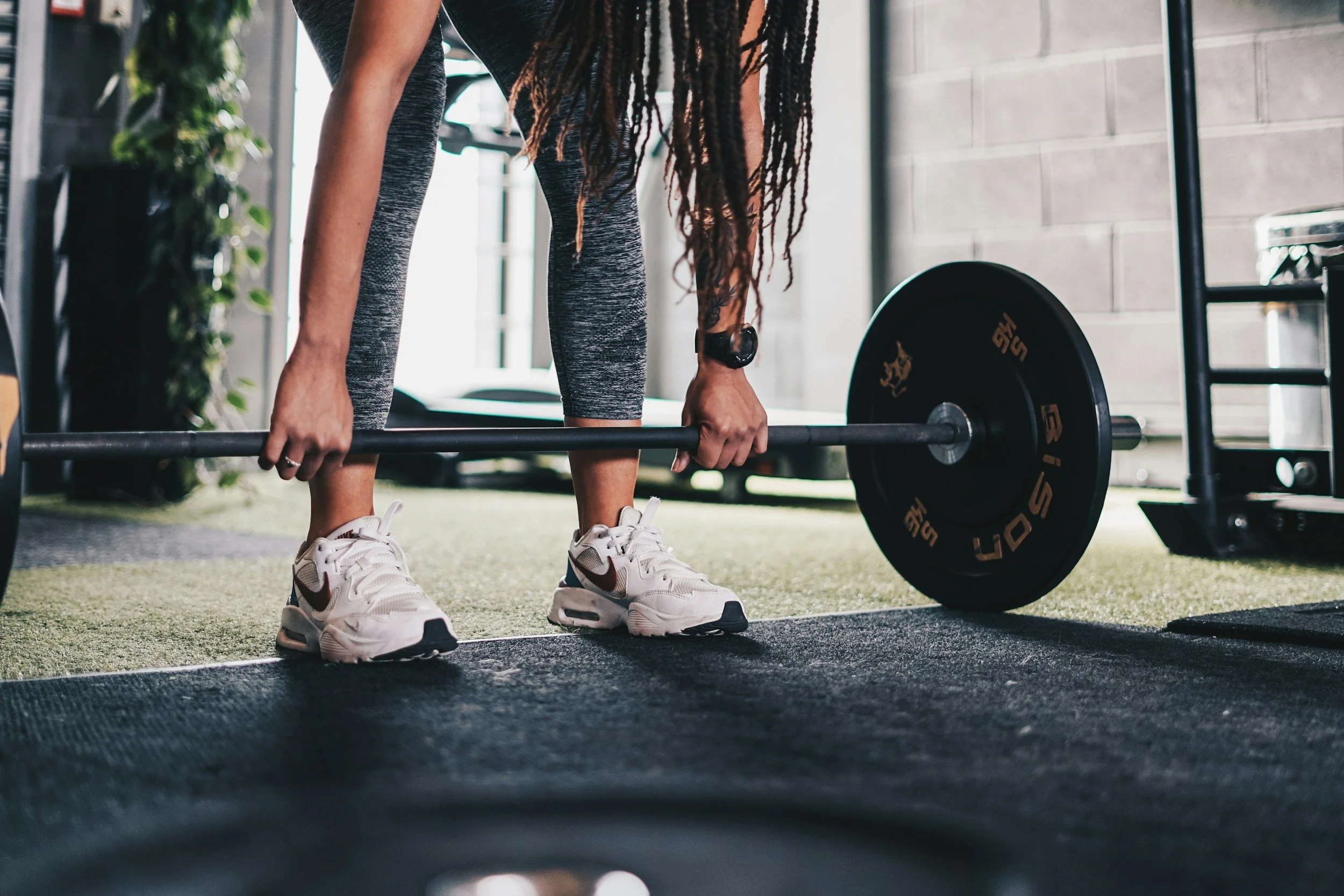
If you've ever walked into a gym and wondered whether you should be using machines or free weights, you're not alone.
It's a question we hear regularly in clinic:
Are machines cheating?
Are free weights better?
Is the leg press as effective as squats?
Am I missing out if I don't use barbells?
For years, free weights were often seen as the "gold standard" of strength training. Machines were sometimes viewed as an easier option or something only beginners should use.
However, modern research paints a different picture.
The reality is that both machines and free weights can be highly effective tools for building strength, increasing muscle mass, improving confidence, and supporting injury recovery.
The key is understanding when and how to use them.
What Does the Research Say?
A large 2023 systematic review involving more than 1,000 participants compared machine-based resistance training with free-weight training.
Researchers looked at outcomes including:
Strength development
Muscle growth
Power and physical performance
The overall finding was surprisingly simple:
There was no clear winner.
Both machine-based and free-weight training produced very similar improvements in strength and muscle development when training volume and effort were appropriately matched.
In other words, your muscles are primarily responding to the challenge placed upon them, rather than whether that challenge comes from a machine, dumbbell, kettlebell, or barbell.
Why Free Weights and Machines Feel So Different
Although the results may be similar, the training experience can be quite different.
Free Weights
Examples include:
Squats
Deadlifts
Dumbbell exercises
Kettlebell exercises
Free weights require your body to control the load throughout the movement.
This often involves:
Balance
Coordination
Stability
Movement control
Because of these additional demands, free weights can be particularly useful for developing movement confidence and preparing for sporting or real-world activities.
Machines
Examples include:
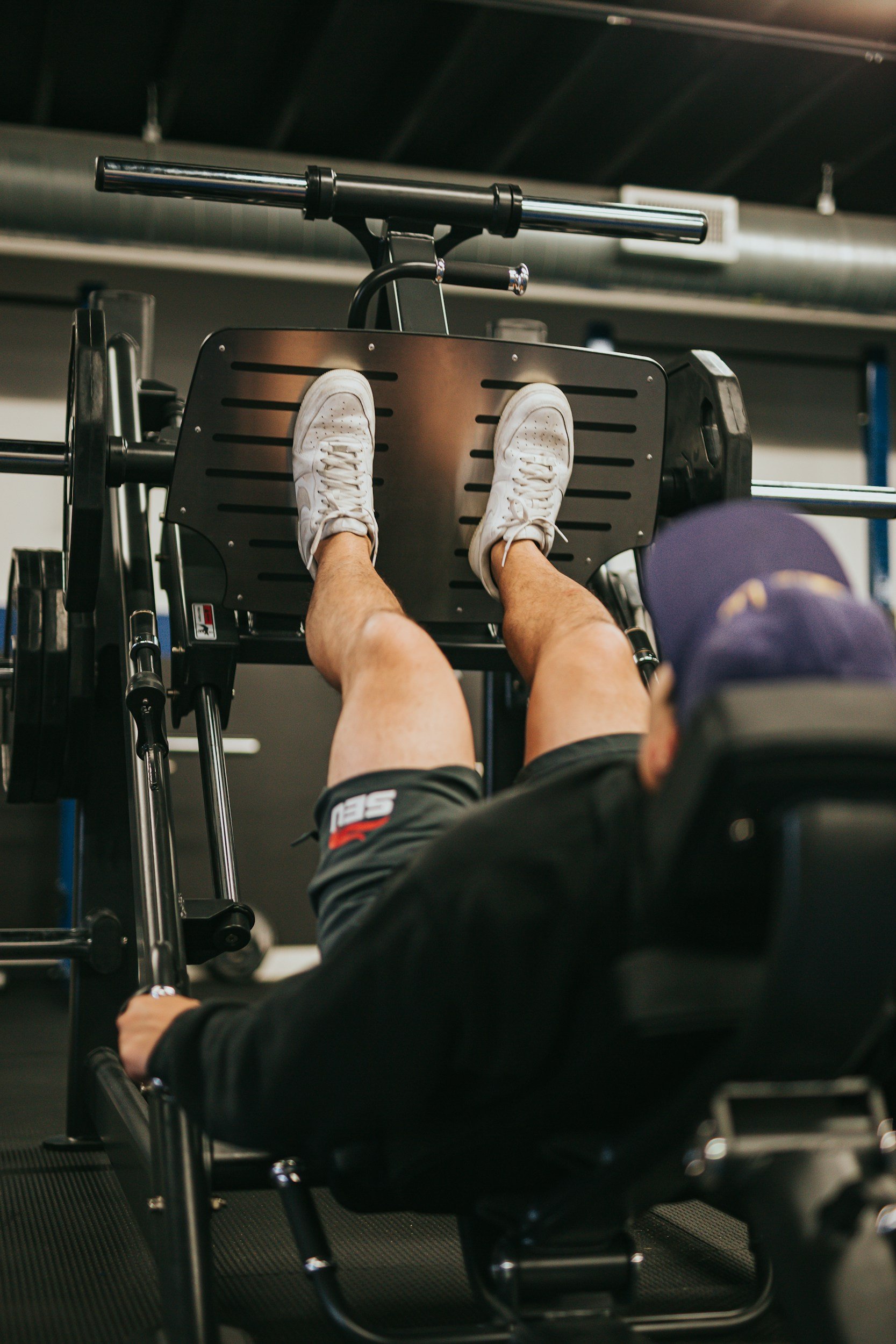
Leg press
Hack squat
Chest press
Seated row
Leg extension
Machines provide more external support and reduce balance requirements.
This often allows people to:
Focus on the target muscles
Lift heavier loads safely
Train through a controlled movement pattern
Build confidence when returning from injury
For many people, this can make strength training feel more approachable.
When Machines Can Be Particularly Helpful
One common misconception is that machines are only for beginners.
In reality, machines can be extremely valuable throughout rehabilitation and performance training.
We frequently use machine-based strengthening when people are:
Recovering from surgery
Managing osteoarthritis
Returning after a running injury
Building strength following an ACL injury
Recovering from tendon pain
Regaining confidence after a period of inactivity
For example, someone recovering from knee pain may initially tolerate a leg press much better than a barbell squat.
That doesn't make the exercise inferior.
It simply means it is the right tool for that stage of rehabilitation.
When Free Weights Become Important
As strength, confidence and function improve, free weights often become increasingly valuable.
This is because they help develop:
Whole-body coordination
Balance under load
Movement adaptability
Confidence in more demanding tasks
For runners, recreational athletes, and active individuals, these qualities often become important when progressing back toward higher-level activities.
The Best Approach Is Usually Both
Rather than viewing this as a competition between machines and free weights, we prefer to think of them as different tools with different strengths.
Many successful rehabilitation programmes follow a progression that looks something like this:
Reduce pain and build confidence.
Restore strength using simple, controlled exercises.
Progress loading as capacity improves.
Reintroduce more complex movements.
Return to sport, recreation, or desired activities.
Machines and free weights can both play important roles throughout this process.
One Important Thing to Remember
Research consistently shows that people improve most at the specific tasks they practise.
If you train squats regularly, you'll become better at squatting.
If you train on machines regularly, you'll become better at those machine-based movements.
This is why strength alone isn't always enough.
For many goals, particularly sport and active lifestyles, we often need to develop both:
Physical strength
Movement skill
Confidence under load
Together, these qualities create resilience and help transfer gym gains into everyday life.
The Take-Home Message
If you're trying to decide between machines and free weights, the answer is simpler than most social media debates would suggest.
Machines are not cheating.
Free weights are not automatically superior.
Both can be excellent tools when used appropriately.
The most effective programme is usually the one that:
Matches your current ability
Supports your goals
Allows progressive loading
Is something you can consistently stick with
If you're recovering from an injury, returning to exercise, or unsure where to start, a physiotherapist can help determine the most appropriate type of loading for your current stage of recovery.
Because ultimately, the best exercise isn't the one that wins an internet debate.
It's the one that helps you move better, become stronger, and get back to doing the things you enjoy.
