
Rolled your ankle? Here’s what actually helps recovery (and what most people get wrong)
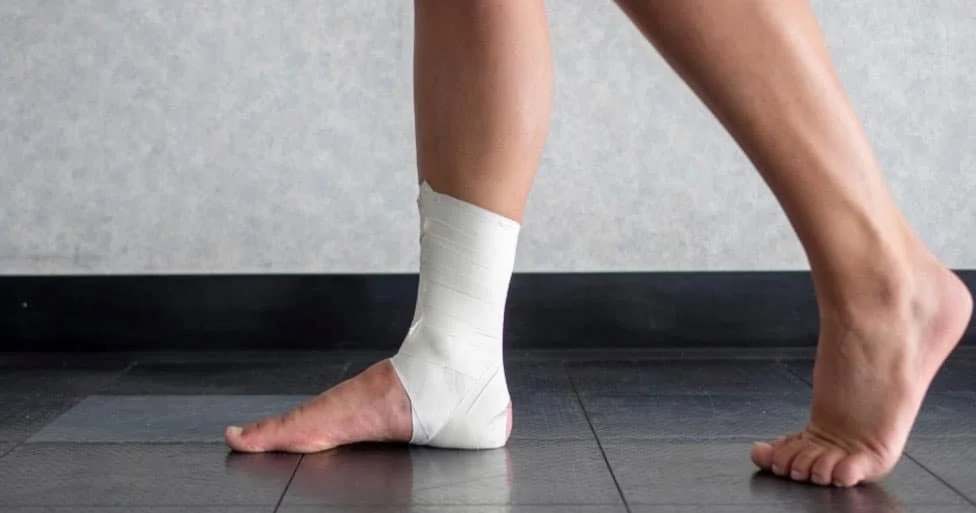
You’re running, training, or just walking—and suddenly your ankle rolls.
Within minutes it’s sore, swollen, and stiff.
And you’re doing the classic mental checklist:
“Should I rest it, ice it, or try to walk it off?”
If that sounds familiar, you’re not alone.
Most healthcare advice (unsurprisingly) comes with acronyms… RICE, PEACE, LOVE—there’s always another one.
But instead of getting lost in the letters, let’s focus on what actually matters: what to do early on, when to start loading it again, and how to get back to training properly.
If you want a deeper breakdown of ankle sprain severity, recovery timeframes, and what’s normal early on, we’ve covered that here:
👉 Ankle sprains: our top tips and timeframes
In this article, we’ll build on that and look at how modern rehab thinking actually applies in practice.
RICE vs LOVE: what’s actually going on?
You may have heard two common approaches:
RICE → rest, ice, compression, elevation
LOVE → load, optimism, vascularisation, exercise
Healthcare does love a good acronym… and ankle rehab is no exception.
They’re often presented as competing systems.
👉 But they’re not.
They simply reflect different stages of recovery
RICE = early symptom management
LOVE = progressive rehabilitation
What the research shows
A 2026 study comparing traditional care with a more active rehab approach found:
Both groups improved—and neither was clearly superior in the short term.
So the more useful question becomes:
👉 not “which is better?”
👉 but “when do you progress from one approach to the other?”
What actually matters
In practice, the issue isn’t which method you choose.
It’s how long you stay in each phase.
Too much early rest → stiffness, weakness, slower recovery
Too much early loading → irritation and flare-ups
👉 The key is progression, not extremes
How we structure recovery in clinic
Phase 1 (Days 1–3): settle symptoms (protect phase)
Gentle movement within comfort
Reduce load (limping is OK early on)
Compression and elevation if swollen
Ice only if helpful for pain
👉 Goal: calm things down without shutting them down completely
Phase 2 (Days 3–10): transition phase
As things settle (and you start trusting it a bit more again):
Gradually increase walking tolerance
Introduce calf raises
Begin balance and control work
Reduce reliance on protection
👉 This is where loading starts to drive recovery
Phase 3 (Week 2+): rebuild phase
Single-leg strength and control
Dynamic balance and hopping
Gradual return to running and sport
Rebuild confidence under load
👉 Goal: restore capacity, not just reduce pain
The biggest mistake we see
People often feel “better” within 1–2 weeks…
and assume the injury is healed.
(Ankle feels good → brain says “we’re back!”)
But pain reduction doesn’t always equal readiness.
Without rebuilding:
strength
balance
coordination
👉 the risk of re-injury remains high
When to get it checked
still limping after ~5–7 days
swelling not improving
ankle feels unstable or unreliable
repeated sprains in the same area
The bottom line
It’s not RICE vs LOVE.
It’s:
settle early → load progressively → rebuild properly
Most injuries don’t need strict rest—or guesswork.
They need:
the right amount of movement, at the right time, progressed properly
If you’re unsure where you sit in that process—or when to safely return to running or sport—that’s exactly where we can help guide you.
